


Lighting has evolved from a purely functional requirement to a critical component of architectural design, user experience, and building performance. In a fast-growing and regulation-driven market like the UAE, delivering effective lighting solutions requires a balance between design intent, energy efficiency, and compliance.
Understanding lighting solutions UAE involves more than selecting fixtures. It requires a strategic approach that integrates technology, sustainability, and design precision. For architects and interior designers, working with experienced lighting consultants is essential to ensure optimal outcomes across modern projects.
Why Lighting Design Is Critical in UAE Projects
In any built environment, lighting shapes how people perceive and interact with a space. It defines architectural character, influences mood, and directly affects the functionality of both residential and commercial settings. Yet in many projects, lighting decisions are still deferred until late in the design process, which often leads to compromised outcomes and unnecessary rework.
In the UAE context, architectural lighting UAE carries additional weight. The region's intense sunlight, heat, and dust create unique challenges for both indoor and outdoor lighting systems. Materials behave differently under extreme temperatures. Glare management becomes a priority in glass-heavy facades. Outdoor lighting UAE must account for high ambient light levels during the day and significant cooling loads at night.
Beyond environmental factors, there is a growing regulatory framework that governs how buildings are lit. LEED certification and Abu Dhabi's Estidama Pearl Rating System both set clear benchmarks for lighting energy performance. Meeting these standards is no longer optional for many project types. Getting lighting design right from the start is, therefore, both an architectural and a commercial priority.
Key Factors to Consider When Choosing Lighting Solutions in the UAE
Selecting the right lighting solutions UAE requires a structured evaluation of multiple variables before a single fixture is specified.
- Integration with architecture and interiors is equally critical. Lighting should be considered alongside the material palette, ceiling heights, natural light sources, and spatial flow. When lighting is designed in isolation, it rarely performs as well as when it is embedded into the overall design intent from the concept stage.
- Energy efficiency is a non-negotiable consideration in the UAE. With rising utility costs and sustainability targets driving procurement decisions, specifiers must evaluate fixture performance, control systems, and long-term energy consumption as part of the selection process.
- Customisation capability matters in high-end residential and hospitality projects where standard fixture catalogues often fall short. The ability to adapt luminaire design, colour temperature, and beam angles to specific spaces gives project teams greater control over the result
- Regulatory compliance should be assessed early. Lighting solutions that do not meet local standards for energy use or light pollution can result in delays at the approval stage, particularly in government and large-scale commercial projects.
Understanding Lighting Design Services and Consultant Roles
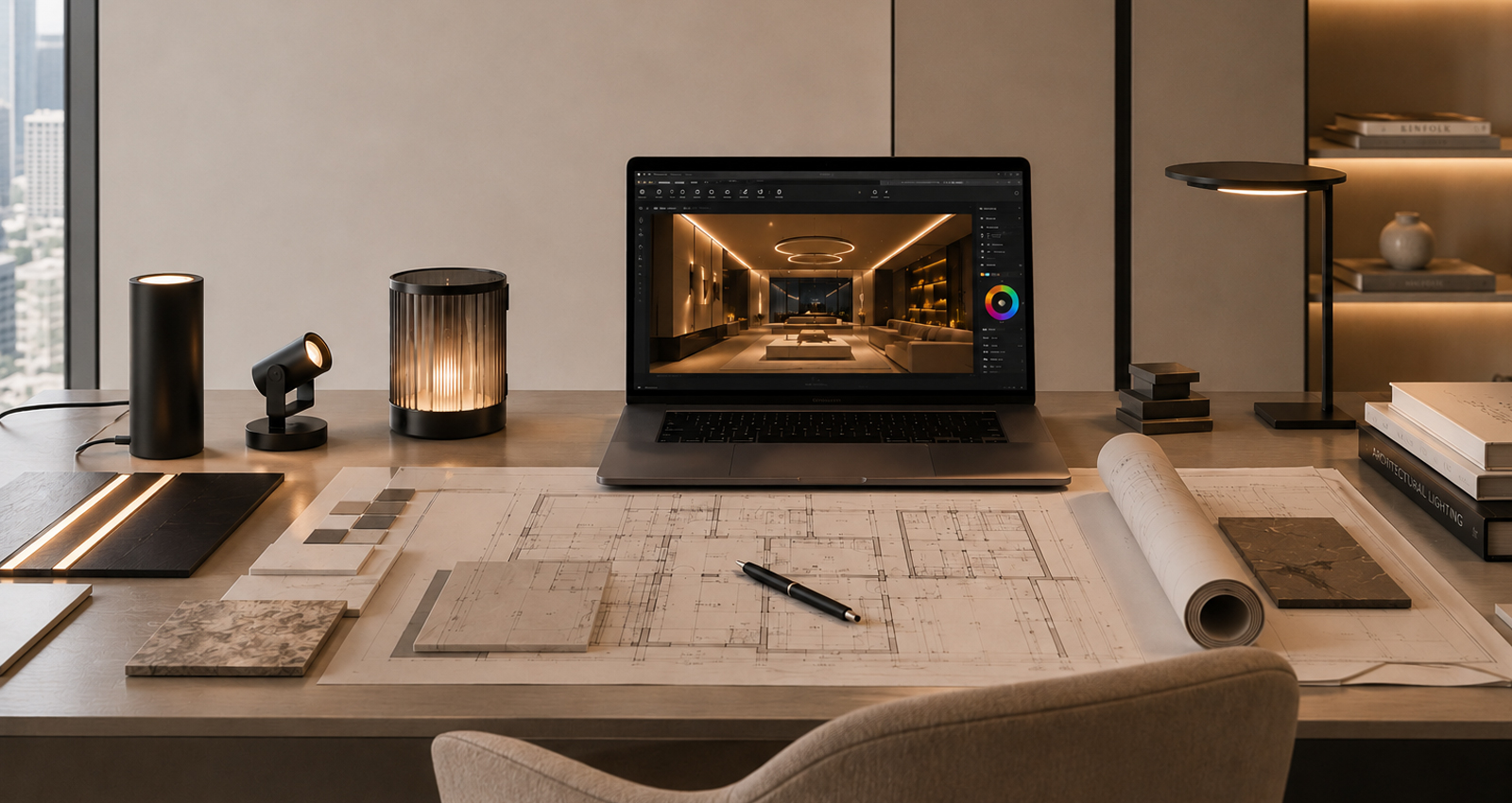
The scope of lighting design services UAE extends well beyond fixture selection. A specialist lighting consultant brings a structured methodology that covers the full project lifecycle.
Concept Design: Lighting designers work with architects and interior designers to develop a strategy that supports the spatial narrative, including natural light management, artificial light zoning, and the overall visual hierarchy of the space.
Technical Planning: Lighting levels, uniformity ratios, and energy calculations are worked out in detail, producing the documentation needed for contractor tendering and MEP coordination.
Simulation and Visualisation: Photometric modelling, rendering, and dynamic daylight analysis allow design teams to assess performance before construction begins, significantly reducing the risk of costly changes on site.
Fixture Specification: Lighting consultants UAE evaluate products against:
- Technical performance data and photometric output
- Warranty terms and manufacturer support
- Local availability and supply chain reliability
- Project budget and lifecycle cost
Implementation Support: On site, consultants verify that installations align with the approved design intent and that commissioning, particularly for smart systems, is carried out correctly.
MEP and Cross-Discipline Coordination: Lighting design intersects with structural, mechanical, electrical, and interior design workstreams. A specialist consultant manages these interfaces, protecting design intent as the project moves through procurement and construction.
Lighting Trends in the UAE (2026)
The UAE market is responding to global shifts in how lighting technology is developed and applied.
Smart and automated lighting is now standard in premium commercial and residential projects. Occupancy sensing, daylight harvesting, and programmable scenes allow building operators to manage energy consumption actively, rather than relying on fixed schedules.
Sustainable lighting solutions UAE are a priority across all project categories. LED technology has matured considerably, and the focus has shifted to whole-system performance, including controls, circadian lighting strategies, and lifecycle assessment.
Human-centric lighting is gaining ground in workplaces, healthcare facilities, and educational environments. The principle is straightforward: light that supports the body's natural rhythms improves concentration, sleep quality, and occupant wellbeing. Specifiers are increasingly being asked to demonstrate how their lighting designs support health outcomes.
BIM-integrated lighting design is becoming the norm on larger projects. Embedding lighting data within BIM models improves coordination, reduces clashes, and provides facility managers with accurate asset information from day one.
Experiential and architectural lighting continues to define landmark projects across Dubai and Abu Dhabi. Facades, public spaces, and hospitality interiors are using light as a primary design tool, creating environments that are as striking after dark as they are during the day.
Challenges in Lighting Design for UAE Projects
Despite the advances in technology and methodology, lighting design projects in the UAE face a consistent set of challenges:
- Balancing aesthetics with performance - Design teams and clients often have strong visual preferences that may conflict with energy targets or maintenance practicality. Resolving this tension requires experience and clear communication from the concept stage.
- Regulatory complexity - Multiple authorities may have overlapping jurisdiction over building lighting, particularly in mixed-use developments or projects near airports and sensitive zones. Early engagement with relevant bodies helps avoid late-stage redesigns.
- Stakeholder coordination - Lighting design touches the work of architects, interior designers, MEP engineers, facade consultants, and contractors. Without clear ownership and communication protocols, design intent can be diluted as the project progresses.
- Budget constraints - Value engineering exercises frequently target lighting before other building systems. The long-term energy and maintenance costs of under-specified solutions are rarely factored in, which increases the total cost of ownership considerably.
- Integration of advanced technologies - Smart systems and BIM-linked workflows add complexity that requires specialist oversight during both design and commissioning phases.
How Expert Lighting Consultants Add Value
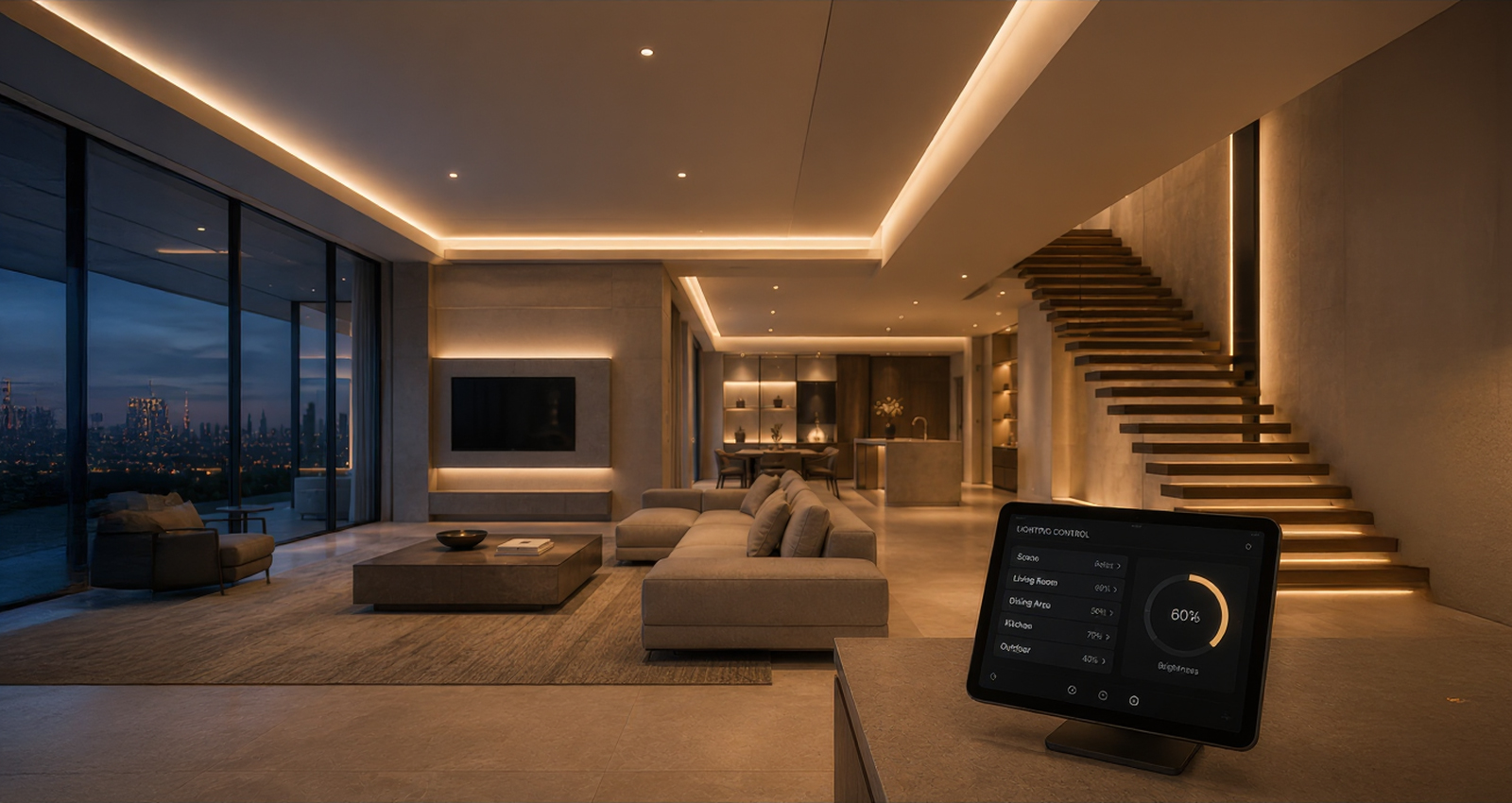
Engaging specialist lighting consultants UAE at the right stage delivers measurable returns across the project and the building's lifetime.
| Area of Value | Outcome |
|---|---|
| Early design integration | Fewer coordination issues, better design coherence, and faster regulatory sign-off |
| Energy performance | Lower consumption, improved maintenance intervals, and longer system lifespans |
| Compliance management | Efficient navigation of local authority requirements, reducing delays at approval stage |
| Stakeholder coordination | Clearer communication between design and construction disciplines, reducing rework |
| End-user experience | Greater comfort, productivity, and satisfaction across retail, hospitality, F&B, and commercial environments |
What to Look for in a Lighting Design Company in the UAE
- Relevant UAE project experience is the most reliable indicator of whether a company can manage local conditions, authority requirements, and supply chain complexity. Ask for project references that are comparable in type and scale to yours.
- Portfolio depth across multiple sectors signals versatility. A company that has delivered successful outcomes in retail, hospitality, commercial, and residential environments understands the different demands of each.
- Technical and creative expertise working together is a marker of genuine competence. Some companies are strong on specification but weak on design concept, or vice versa. The best outcomes come from teams that can bridge both disciplines effectively.
- Collaboration and communication are often underrated in the selection process. Lighting design requires close working relationships with multiple design and construction disciplines. A company that communicates well and integrates smoothly into a wider project team will reduce friction and protect the design throughout delivery.
Common Mistakes to Avoid in Lighting Design Projects
Several recurring mistakes undermine lighting quality and project outcomes across the UAE market.
- Treating lighting as an afterthought is the most common. When lighting is considered late in the design process, the options available are limited and the costs of change are higher.
- Prioritising initial cost over whole-life value leads to under-specified systems that consume more energy, require more frequent maintenance, and often fail to meet regulatory benchmarks.
- Ignoring energy efficiency at the specification stage creates problems during building certification and can result in additional costs to retrofit compliant solutions.
- Poor coordination between design disciplines is responsible for a significant proportion of site-level lighting problems, from fixture positions that conflict with structural elements to control systems that cannot be commissioned as designed.
The Future of Lighting Solutions in the UAE
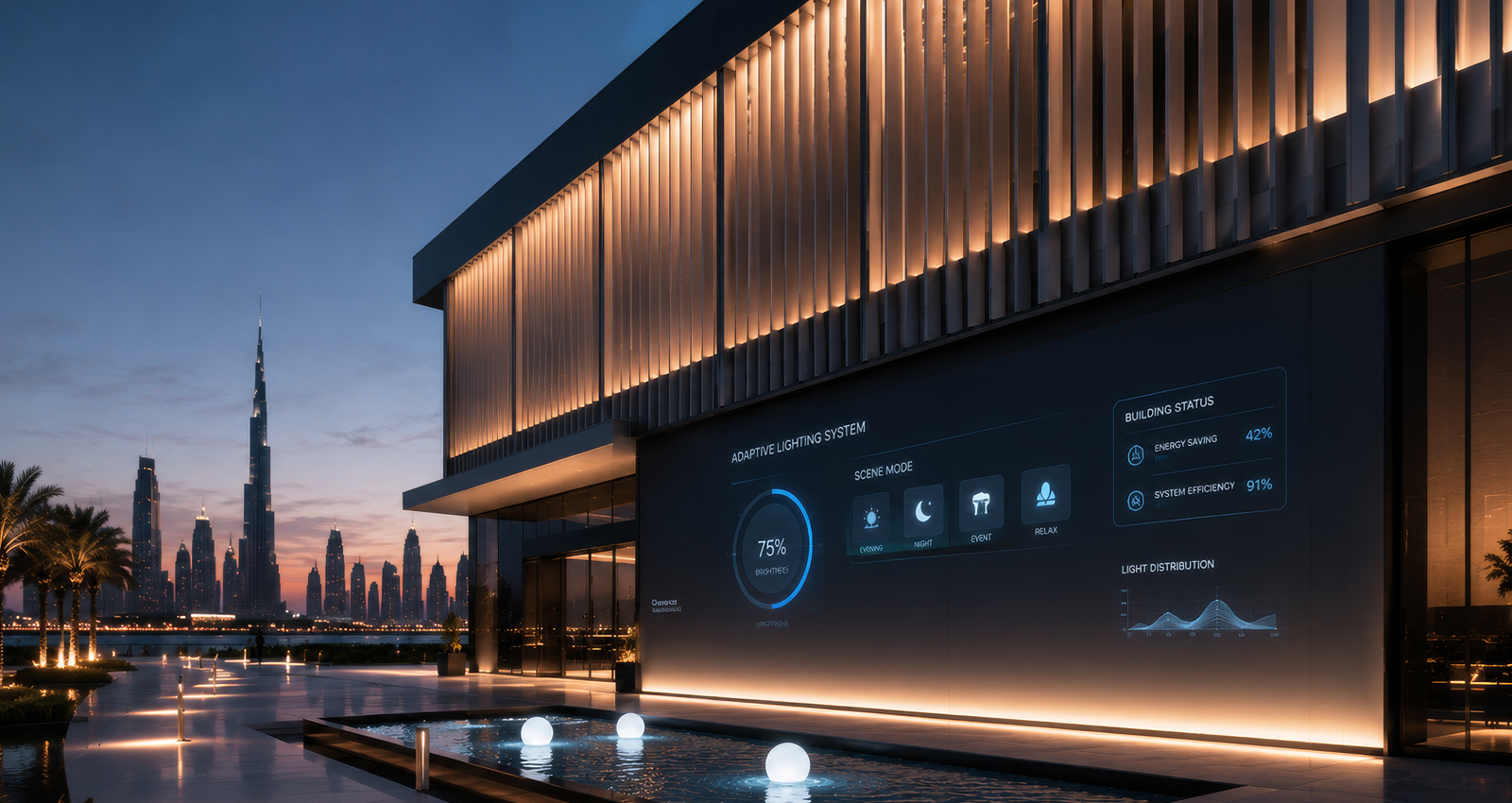
futuristic lighting design in UAE
The trajectory for lighting in the UAE points toward greater intelligence, sustainability, and integration:
- AI-driven lighting systems will move beyond simple automation to predictive management, adjusting output based on occupancy patterns, external conditions, and user preferences simultaneously.
- Smart city integration in Dubai and Abu Dhabi will increasingly require building lighting systems to communicate with wider urban infrastructure, making interoperability a design consideration from the outset.
- Data-driven lighting design will allow building operators to optimise systems continuously using real-time performance monitoring and analytics, rather than relying on periodic maintenance reviews.
- Sustainability advancements will push the sector toward circular economy principles, with greater emphasis on recyclable materials, repairability, and extended product lifespans.
- Experiential lighting will continue to grow as a differentiator in the UAE's competitive property and hospitality market, with light remaining a primary tool for creating distinctive, responsive environments.
Design with Confidence: Choosing the Right Lighting Partner
Effective lighting design is one of the most consequential decisions in any built environment project. It shapes how people experience a space, how a building performs over time, and how well it meets the regulatory and sustainability standards that define the UAE market today.
Working with an experienced lighting partner from an early stage protects the design intent, reduces the risk of costly changes, and delivers better outcomes for every stakeholder involved. The value of that expertise compounds across the life of the project and the building.
Lighting Solutions UAE: FAQs
- What are lighting solutions in the UAE?
Lighting solutions encompass the design, planning, and implementation of lighting systems developed to meet the architectural, functional, and regulatory requirements of a specific project or building type.
- Why are lighting consultants important in UAE projects?
Lighting consultants bring specialist knowledge of design methodology, local compliance requirements, energy performance standards, and product specification that generalist teams often lack. Their involvement typically results in better outcomes at lower long-term cost.
- What are the latest lighting trends in the UAE?
Smart and automated systems, sustainable lighting solutions, human-centric design, and BIM integration are among the most significant trends shaping the sector in 2025 and 2026.
- How do I choose a lighting design company in the UAE?
Evaluate UAE-specific experience, portfolio breadth, technical and creative capability, and the company's approach to collaboration with wider project teams. References from comparable projects are the most reliable basis for comparison.
