


In many UAE projects, lighting is still treated as a finishing decision rather than a design priority. The outcome is predictable: spaces that feel visually inconsistent, consume more energy than necessary, and fail to deliver the experience they were designed to create.
Architectural lighting design is the process of planning and integrating light within a built environment to enhance aesthetics, functionality, and long-term performance, aligning every lighting decision with architectural intent, spatial use, and user experience.
In a market like Dubai, where design quality and operational efficiency carry equal weight, that distinction matters considerably.
What Is Architectural Lighting Design?
Architectural Lighting Design Explained
Think about the last time you walked into a space that just felt right. The atmosphere was comfortable, the materials looked exactly as they should, and nothing about the lighting drew attention to itself. That is rarely an accident. It is the result of deliberate, well-considered lighting design.
At its core, architectural lighting design is about understanding how light behaves within a space rather than simply how much of it is needed. It takes into account spatial layout, surface materials, occupant behaviour, and the interplay between natural and artificial light sources.
The contrast with conventional lighting practice is straightforward:
| Traditional Lighting | Architectural Lighting Design |
|---|---|
| Meets basic brightness requirements | Supports the full architectural and spatial intent |
| Fixtures chosen for availability and cost | Fixtures specified for performance and integration |
| Planned after architecture is finalised | Embedded in the design process from the start |
| Minimal cross-discipline coordination | Active coordination with architecture, interiors, and MEP |
| Judged on installation cost | Judged on experience, efficiency, and long-term value |
Core Elements That Define Effective Lighting Design
Good architectural lighting design rests on a few principles that work together rather than in isolation:
Light layering: Ambient, task, and accent lighting each serve a purpose. Used together, they create depth, visual hierarchy, and a sense of balance that a single light source cannot achieve
Colour temperature and intensity: The warmth or coolness of light, and how bright it is, shapes how a space feels and how well it functions for the people using it
Spatial integration: Lighting positions, angles, and outputs need to be coordinated with the architecture they are meant to enhance, not overlaid onto it afterwards
Controls and flexibility: The ability to adjust lighting based on time of day, occupancy, or activity is what separates a static installation from a genuinely well-designed system
Why Architectural Lighting Design Matters in Dubai Projects
Creating Visually Impactful Spaces
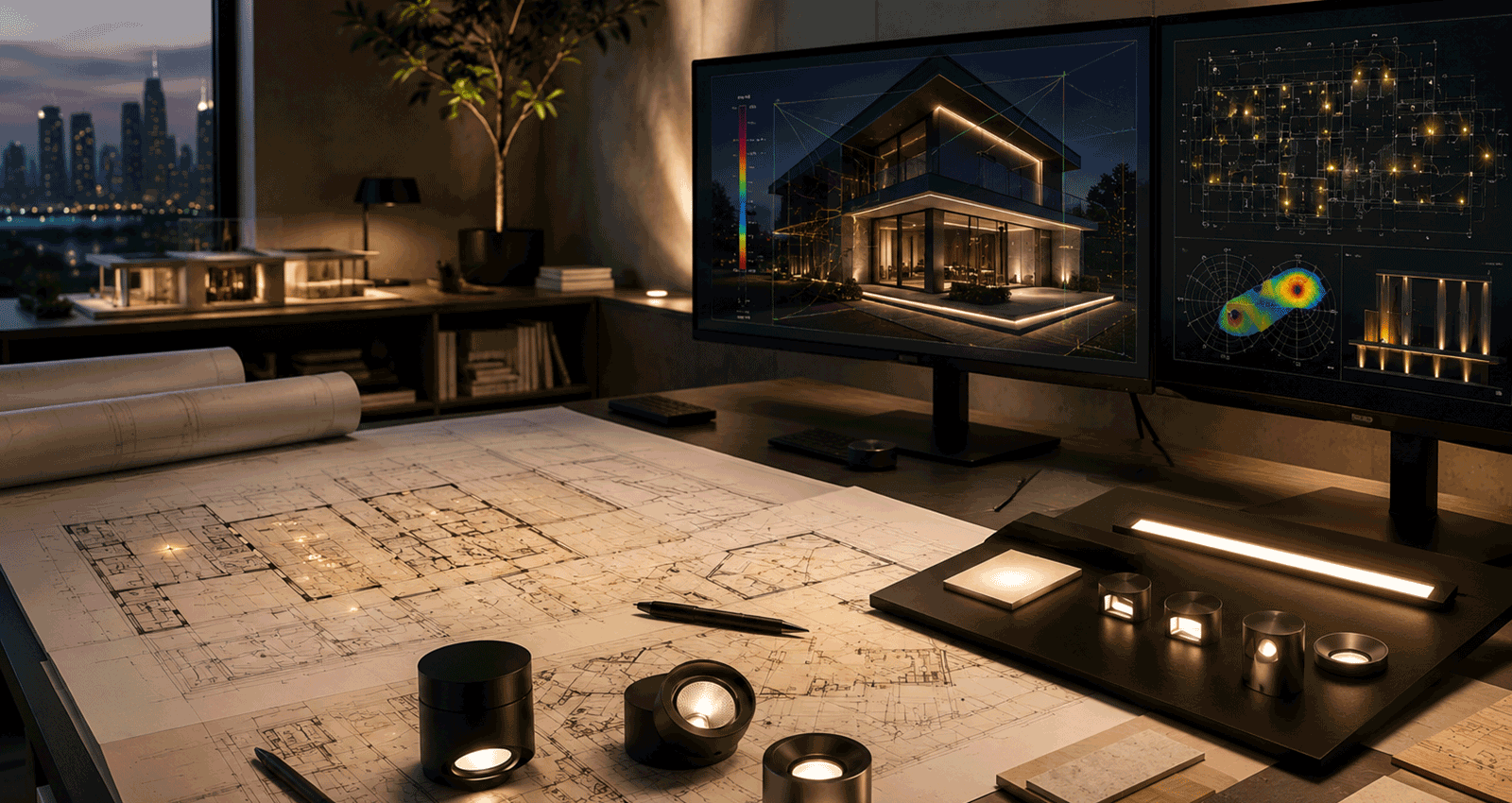
Dubai sets a high standard for built environments. In a city where design is competitive and expectations from clients and end users are consistently elevated, lighting is one of the primary ways a project communicates its quality.
Well-executed lighting design in Dubai brings out the best in surface finishes, draws the eye to architectural features, and creates a sense of visual coherence that holds up long after the initial impression. Poor lighting does the opposite. It flattens surfaces, creates unflattering contrasts, and undermines the value of materials and finishes that significant budget has been invested in.
Enhancing Functionality Across Environments
Lighting affects behaviour more than most people realise. In offices, it influences concentration and how long people can work comfortably before experiencing fatigue. In retail, it affects where customers look and how long they stay. In hospitality environments, it is one of the biggest contributors to the atmosphere guests remember.
Architectural lighting design makes sure that each area within a project is lit in a way that genuinely supports how it is used, not just how it appears in a photograph or a rendering.
Improving Energy Efficiency and Long-Term Costs
Energy efficiency has moved from being a sustainability ambition to a practical requirement across UAE projects. Modern LED-based systems, when properly designed and controlled, can reduce energy consumption by 50 to 70 percent compared to older conventional systems.
The important caveat is that these savings only materialise when energy performance is treated as a design objective from the start. Retrofitting controls or swapping out fixtures after installation costs significantly more than specifying the right system upfront. This is one of the strongest practical arguments for investing in professional lighting design early in a project.
What Do Professional Lighting Design Services Include?
Lighting Planning and Concept Development
Professional lighting design services begin long before a single fixture is specified. The first stage is about understanding the project brief, defining what the lighting needs to achieve across different spaces, and developing a concept that sits comfortably within the overall architectural and interior design direction.
Lighting at this stage is treated as a core design element, with the same level of attention that goes into material selection or spatial planning.
Detailed Layout and Technical Design
Once the concept is established, detailed design work translates the strategy into technical documentation. This includes:
- Fixture placement and mounting heights
- Lux level calculations and uniformity ratios
- Control system architecture and zoning
- Energy performance calculations for compliance purposes
- Specifications for procurement and contractor tendering
This level of detail reduces ambiguity during construction, minimises the risk of installation errors, and provides a clear basis for commissioning.
Coordination with Architecture and Interiors
One of the clearest advantages of engaging specialist lighting design services is the quality of integration achieved with other design disciplines. Lighting must work in harmony with structural elements, ceiling systems, facade materials, and interior finishes.
Without active coordination, conflicts arise during construction, from fixture positions that clash with structural elements to control systems that cannot be commissioned as designed. Professional coordination prevents these issues before they reach site.
Why Hiring a Professional Lighting Design Company Matters
Technical Expertise and Industry Knowledge
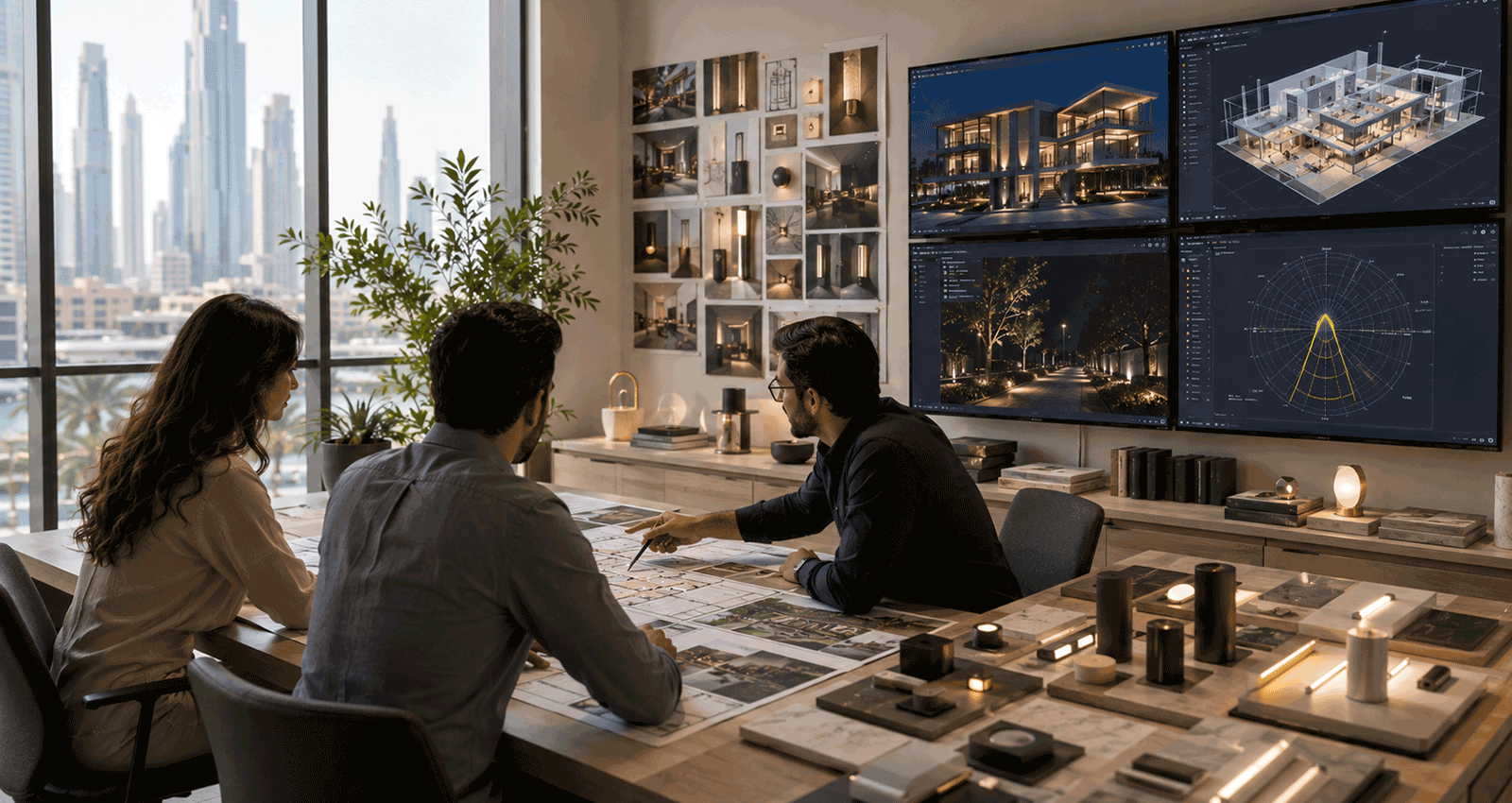
There is a meaningful difference between a team that understands lighting and one that specialises in it. A professional lighting design company brings expertise in photometrics, control systems, energy compliance, and material behaviour under different light conditions that generalist teams simply do not carry.
In the UAE specifically, familiarity with local authority requirements, green building standards, and the regional supply chain adds practical value that goes beyond technical knowledge.
Efficient Execution and Risk Reduction
Problems that are identified and resolved at the design stage cost a fraction of what they cost to address during or after construction. Professional planning reduces the likelihood of delays, rework, and budget overruns by addressing potential issues before they reach site.
A specialist company also provides continuity between the design intent and what actually gets built, which matters enormously on projects where the team changes between design and construction phases
Long-Term Performance and ROI
Well-designed lighting systems require less corrective maintenance and deliver consistent performance across their operational life. This has a measurable impact on total cost of ownership, particularly in commercial and hospitality environments where lighting operates for extended hours daily.
The return on investment from professional lighting design is realised not just at project completion, but continuously through reduced energy consumption, lower maintenance frequency, and spaces that continue to perform as intended over time.
Where Architectural Lighting Design Is Applied
Commercial and Office Environments
In offices and commercial spaces, lighting affects productivity, wellbeing, and how the brand environment feels to both employees and visitors. Thoughtful design accounts for screen glare, the varying needs of collaborative and focused work areas, and the transition between naturally and artificially lit zones throughout the day.
Retail and Hospitality Spaces
These are the environments where the commercial impact of lighting is most immediately felt. In retail, lighting directs attention, reinforces brand identity, and subtly influences purchasing decisions. In hospitality, it is a primary contributor to the atmosphere that guests carry with them long after they leave.
Getting lighting right in these sectors is not just a design decision. It is a business one.
Residential Projects and Villas
In residential settings, lighting shapes how a home feels to live in day to day. From the quality of light in a kitchen to the atmosphere of an outdoor terrace in the evening, architectural lighting design ensures that every area of the home is comfortable, functional, and reflects the lifestyle it was designed for.
Key Considerations in Architectural Lighting Design

Lighting Layout and Spatial Planning
Proper layout planning ensures uniform illumination and eliminates both dark zones and areas of excessive brightness. Layout decisions must be based on the spatial structure, ceiling height, surface reflectance, and the specific activities taking place in each area.
Selection of Fixtures and Technology
Choosing the right fixtures and control technology is fundamental to achieving the desired result within the project budget. Key selection criteria include:
- Photometric performance: Does the fixture deliver the required light distribution?
- Colour rendering index (CRI): Does it accurately render materials and finishes?
- Energy classification: Does it meet efficiency requirements for the project?
- Integration capability: Is it compatible with the control system specified?
- Maintenance profile: How does it perform over its rated lifespan?
Balancing Aesthetics with Functionality
The most successful lighting designs do not force a choice between looking good and working well. Both dimensions receive equal consideration throughout the process, which is why spaces lit by specialist designers tend to feel right rather than simply look impressive in isolation.
How to Choose the Best Lighting Design Company in Dubai
Evaluate Experience and Project Portfolio
When selecting the best lighting design company in Dubai, reviewing completed projects is the most reliable way to assess capability. A strong portfolio demonstrates experience across different project types, scales, and sectors, and provides an honest picture of the quality the company consistently delivers.
Look for a Project-Specific Design Approach
Every project has a distinct brief, budget, and set of design intentions. A company that applies the same approach regardless of project context is unlikely to deliver outcomes that genuinely serve the client's objectives. Look for evidence that the company asks the right questions early and develops solutions that reflect the specific demands of each project.
Ensure End-to-End Capability
A reliable lighting design company should be capable of supporting the project from concept through to commissioning and handover. Fragmented services, where design and execution are managed by different parties without coordination, introduce risk at every transition point. End-to-end capability ensures consistency and clear accountability throughout the project lifecycle.
Common Lighting Design Mistakes to Avoid
The following errors are consistently responsible for underperforming lighting outcomes across UAE projects:
- Treating lighting as a late-stage decision, which limits options and inflates the cost of change
- Over-lighting spaces to compensate for poor layout planning, which increases energy consumption without improving quality
- Specifying fixtures based on appearance alone without evaluating photometric performance
- Failing to coordinate lighting with MEP and structural elements, leading to clashes during construction
- Neglecting control system design and losing the energy and experiential benefits that proper programming delivers
Lighting as a Design Decision, Not an Afterthought
The projects that get lighting right share one thing in common: the decision to treat it seriously from the start. Not as a line item to be value-engineered late in the process, but as a discipline that shapes how the space looks, feels, and performs for everyone who uses it.
In a market as design-conscious and performance-driven as the UAE, that approach is not a luxury. It is what separates good projects from genuinely great ones. Working with an experienced lighting design company ensures that the decisions made early translate into outcomes that hold up long after the project is complete.
Frequently Asked Questions
What is the difference between lighting design and architectural lighting design?
General lighting design addresses illumination requirements. Architectural lighting design integrates light as a deliberate design element, coordinated with the architecture, interiors, and building systems to enhance the spatial experience and long-term performance of the project.
How does architectural lighting design impact user experience?
Light shapes how people perceive and move through a space, how comfortable they feel, and the overall impression the environment creates. Spaces with considered lighting feel coherent and purposeful. Those without it rarely do, regardless of how well other design elements have been executed.
Is architectural lighting design important for small projects or only large developments?
The principles apply at every scale. A poorly lit small space is often more noticeable than a poorly lit large one. Even modest residential or commercial projects benefit from structured lighting planning, particularly where energy performance and quality of finish matter to the client.
Can poor lighting design affect energy consumption?
Directly and measurably. Over-specified systems, inefficient fixture selection, and the absence of lighting controls all contribute to unnecessary energy use. A professionally designed system, built around energy performance as a core objective, consistently delivers lower consumption and more manageable operating costs over its lifetime.
